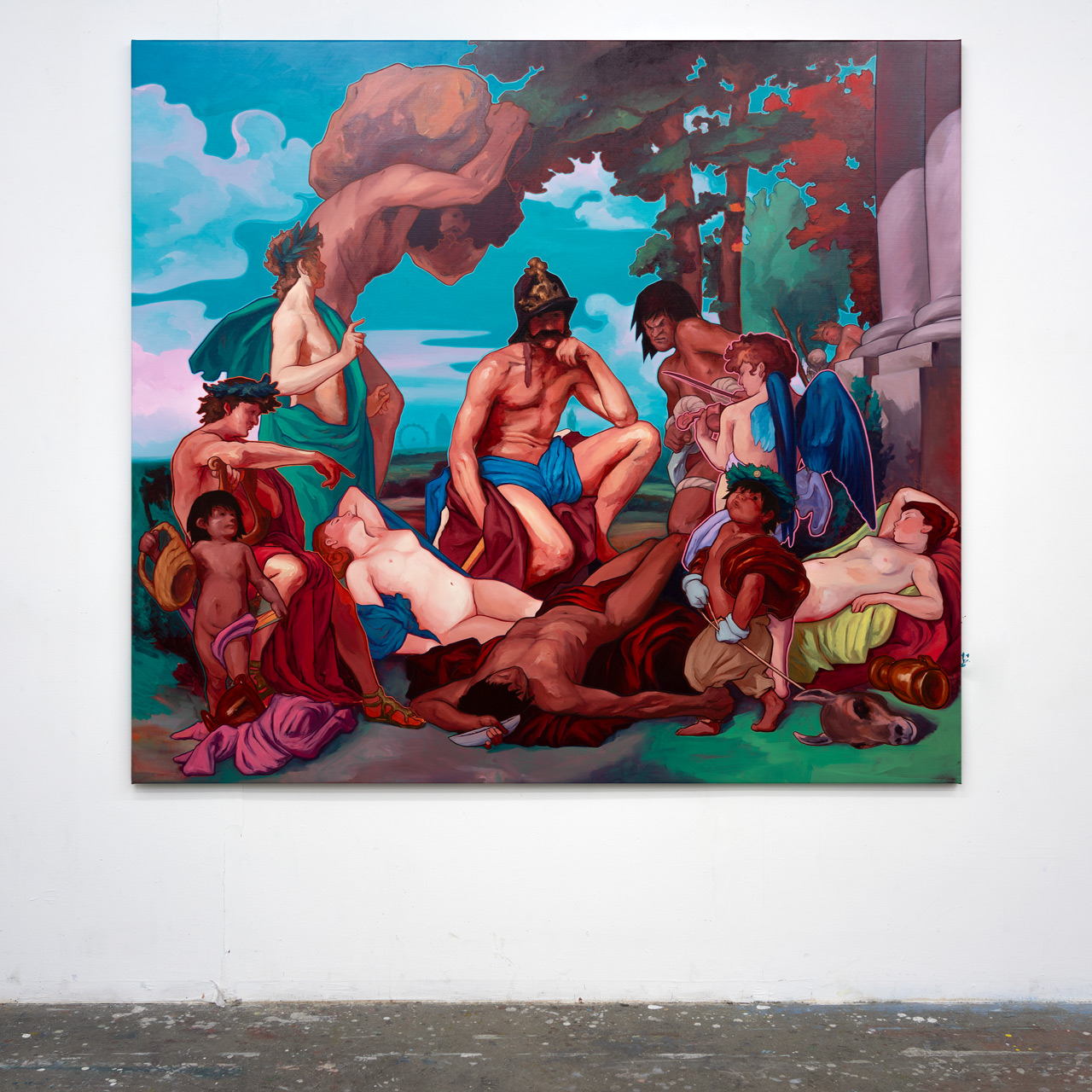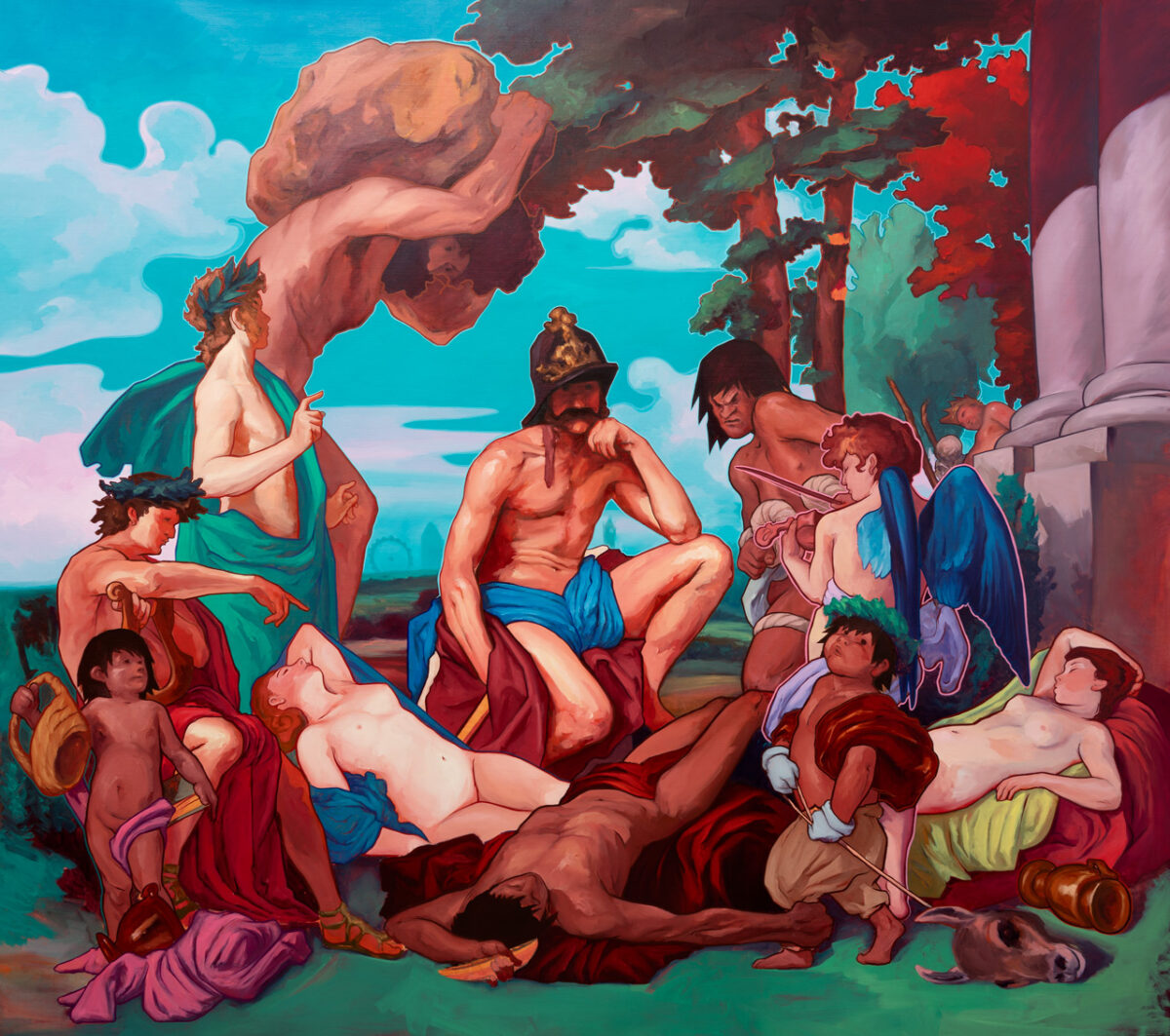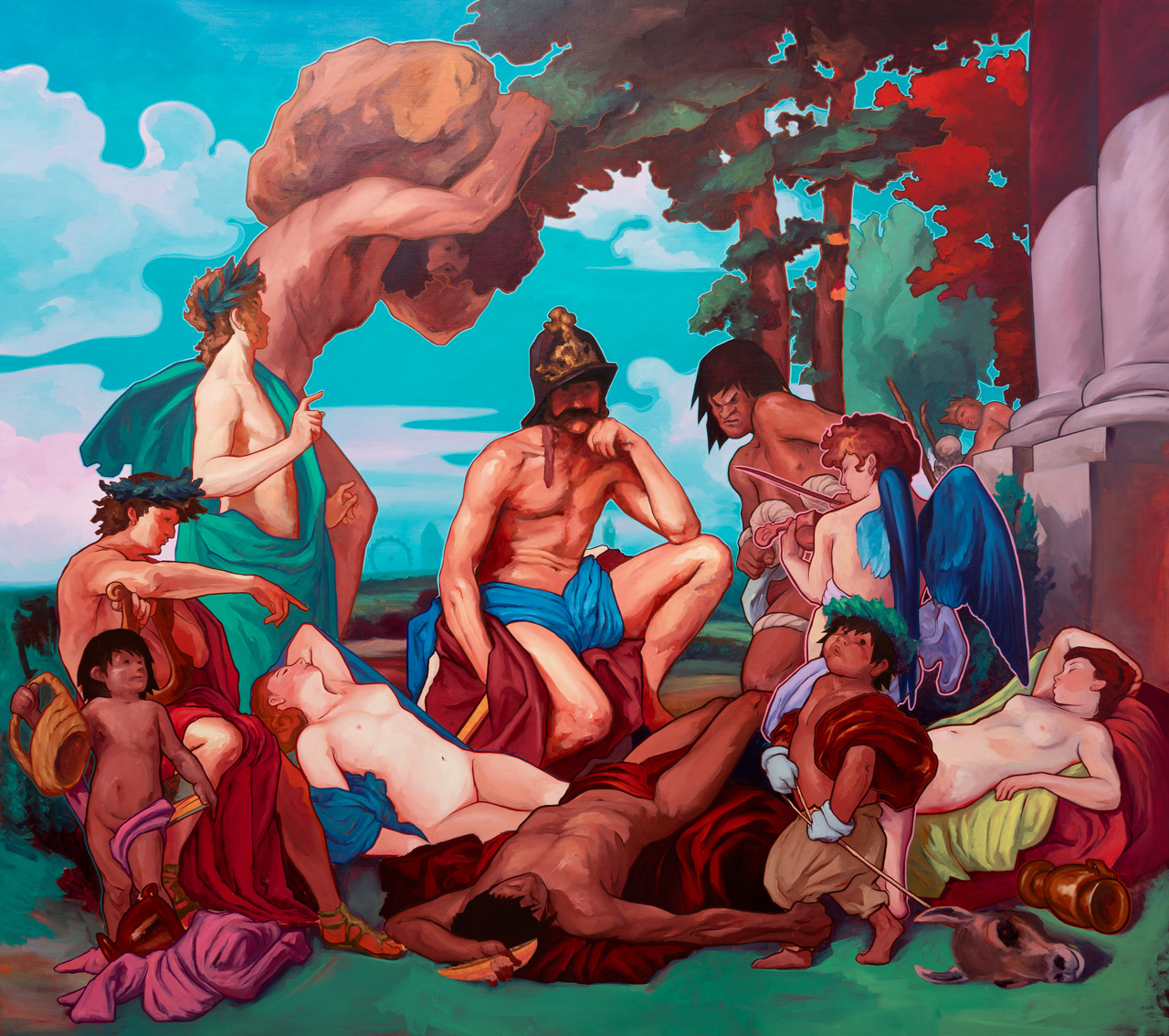
The second chapter takes place at the end of the voyage: London looms on the horizon. Boat Memory, the captain’s favourite, was the first to fall. Despite having been vaccinated, he died of smallpox at the Plymouth naval hospital in November 1830, only a few weeks after setting foot in England. FitzRoy left a written record of his affection for the young man and of the guilt this death caused him — the first crack in the civilising experiment he himself had set in motion.
The scene is built entirely from figures of the European canon: bodies taken from Velázquez, Titian or Poussin, decontextualised and barely altered to embody characters from the Fuegian story. Velázquez’s melancholy Mars lends his pose to the stricken captain, surrounded by a cortège keeping vigil over the dead youth amid the remains of a bacchanal.
At the top of the composition, a Sisyphus advances, stone upon his back: FitzRoy’s guilt turned into mythological burden, the kind that is never fully paid off. European painting, which never recorded this story, is put here to tell it with its own bodies.
Gallery